
We keep things that take us somewhere — a photograph, a note, an old video, a sound that reminds us of home or of someone we love.
Onorica began with the idea that sound can hold that same meaning.
Using parametric design, sound becomes data, data shapes geometry, and geometry becomes jewelry. The piece doesn’t play the recording back; the sound lives in the way it was formed.
Beyond sound, we also design around color, stones, proportion and personality, because the pieces we keep are often the ones that feel unmistakably ours.
Onorica is built around the idea that something deeply personal does not need to look literal to be understood. Our pieces draw from sound, memory, color and identity, translating them into abstract forms that feel contemporary rather than illustrative.
The aesthetic is intentionally familiar in its restraint — clean proportions, precious materials, quiet details — but each piece carries an underlying geometry that makes it unmistakably personal. We are interested in the tension between the recognizable and the unexpected: jewelry that belongs naturally in everyday life, while holding a meaning that may only be visible to the person wearing it.
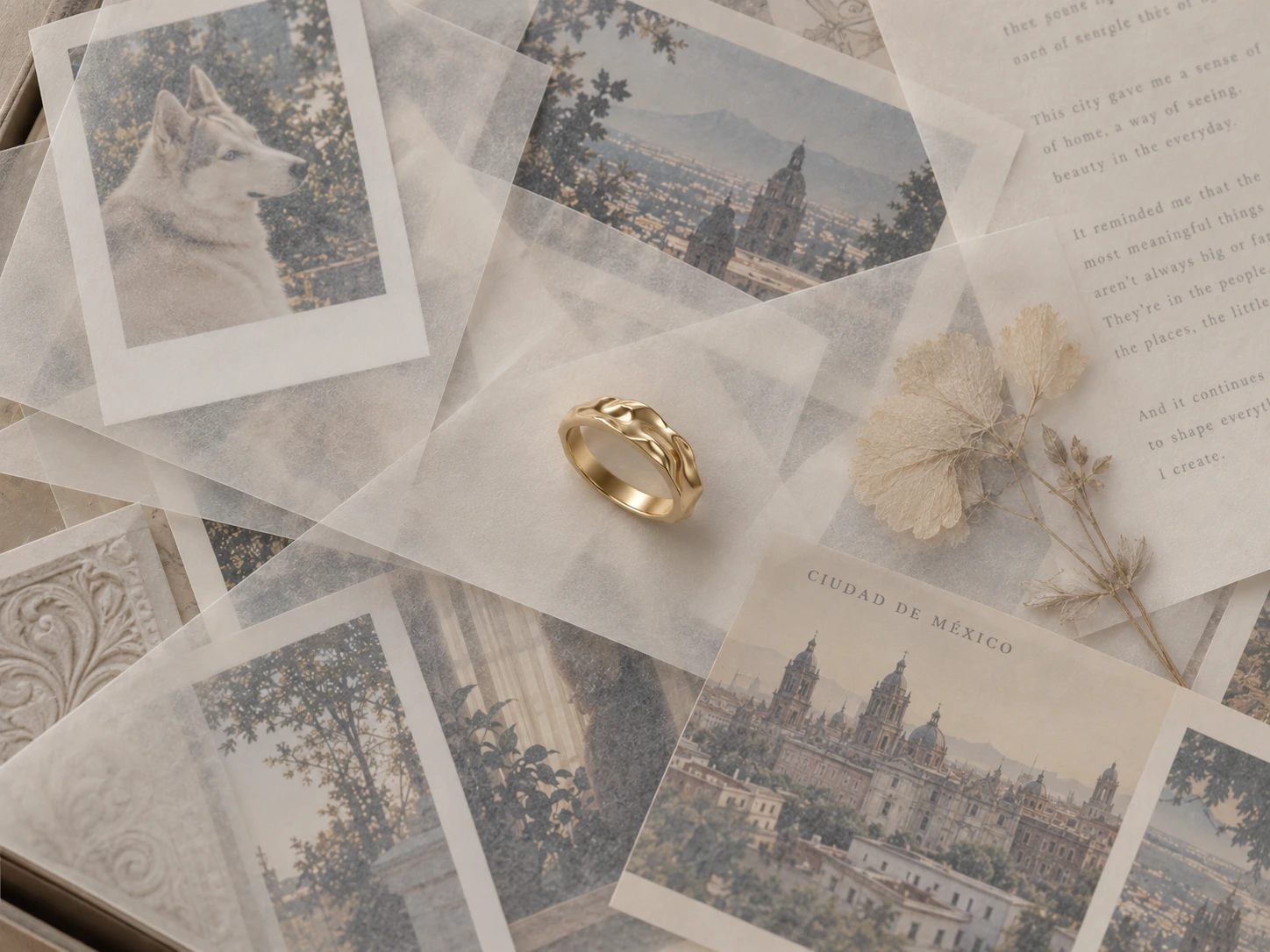

We all keep things that take us somewhere — a photograph, a note, an old video, something that reminds us of a moment we don't want to lose. Onorica began with the idea that sound can hold that same kind of meaning.
Using parametric design, sound becomes data, data shapes geometry, and geometry becomes something you can wear.
The jewelry doesn't play the sound back. That's not the point. The recording is already embedded in the way the piece was formed.
But memory isn't the only language we work with.
Alongside our sound-generated pieces, we design jewelry around color, stones, proportion and personality — pieces that can be playful, expressive or simply very specific to the person wearing them. Not everything meaningful has to come from something you've lost.
What ties it all together is the same belief: jewelry that's genuinely, specifically yours tends to become the piece that matters most — not because it's traditional, but because it's unmistakably you. And the pieces that are unmistakably someone are usually the ones that get kept, and passed down, and asked about, for generations.
T H E V A L U E B E H I N D Y O U R P I E C E
I N T E N T I O N 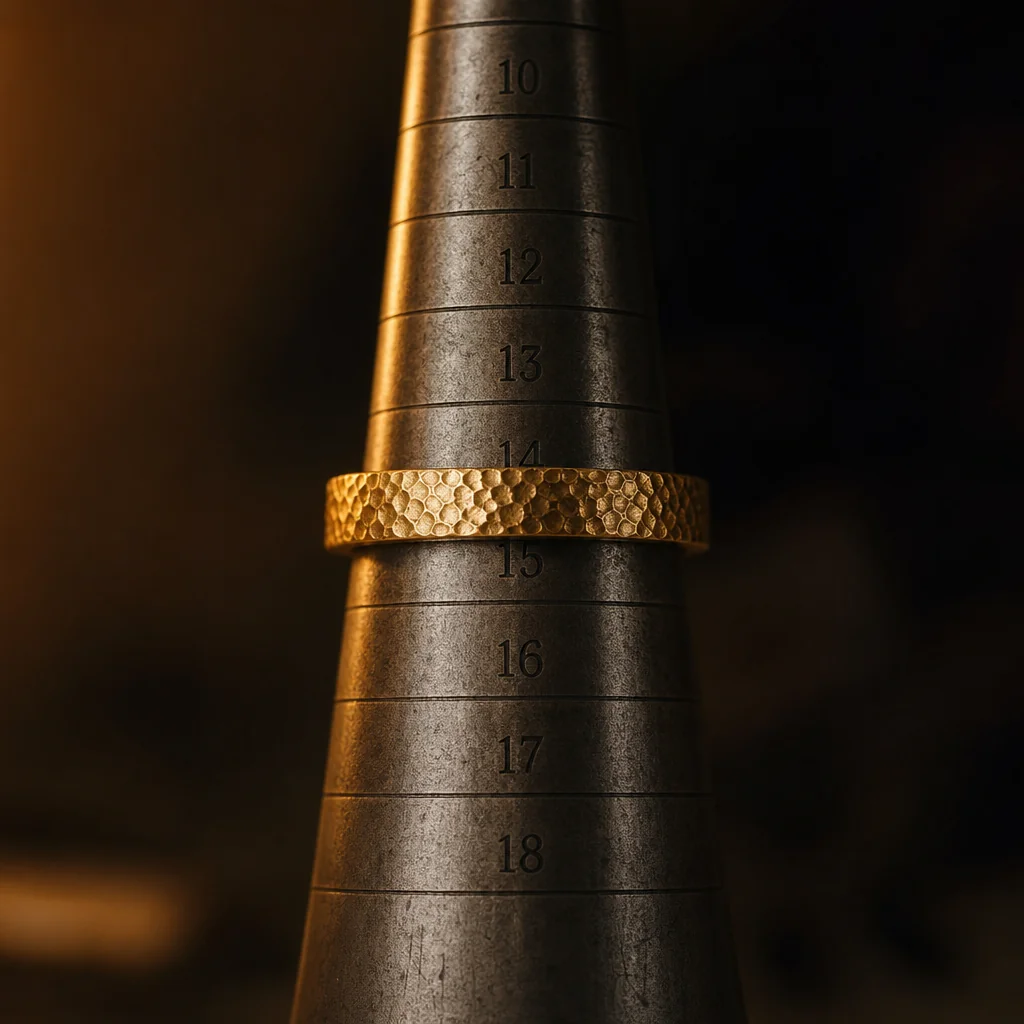
We use lab-grown diamonds for their brilliance and quality, without tying them to artificial scarcity or investment value. Natural colored stones are chosen for their character and individuality.
M A D E T O L A S T
We work with precious metals because jewelry should be made to stay. Gold, silver and platinum can be worn, repaired, refinished and passed on.
H U M A N F I N I S H
Every piece may begin in CAD, but it is finished by people. Skilled craftspeople in Brussels and Antwerp cast, set, finish and polish each piece by hand.
Technology shapes the idea. Craft gives it permanence.
A B O U T M E
I grew up in Mexico City, a place that never really goes quiet.
Moving to Brussels changed my relationship with sound. Life felt quieter and more spacious, and in that silence I became more aware of what I missed from home.
One of those things was my dog, Zeus.
I would replay old Instagram stories just to hear him howl. I didn’t want a literal memorial or something everyone could immediately understand. I wanted to keep that memory in a form that could remain personal — recognizable because I knew what it meant.
That idea eventually met my work.
I had spent years designing jewelry in CAD, but mostly translating other people’s ideas of beauty. Parametric design changed that. Forms could suddenly respond to rules, data and inputs; design felt alive again.
When I discovered artists translating sound into physical form, the connection felt natural: sound could become something personal, wearable and almost impossible to repeat.
That became Onorica.
Maybe living away from home made me more aware of the things we carry with us. A voice, a laugh, a familiar sound, a color, an object — small things can hold an enormous sense of place and identity.
That is what interests me most about jewelry.
Not necessarily the piece everyone understands.
The one that means something very specific to the person wearing it. it.
FAQ
Your sound is translated into data, and that data becomes an input within a parametric design system created by Onorica.
Different characteristics of the recording generate different values, which influence the geometry of the piece. From there, we refine how those values are interpreted — softer or sharper, more pronounced or restrained — until the result becomes both meaningful and wearable.
The sound starts the form. Design makes it jewelry.
No.
A soundwave is a visual representation of audio. At Onorica, the recording is used as data within a parametric system that generates and transforms three-dimensional geometry.
You won't necessarily look at the finished piece and see a waveform — and that is intentional. Its origin can remain something known only to you.
The computer doesn't decide what the jewelry looks like — it follows rules.
We design those rules: how the sound is read, which values affect the geometry, how far those transformations can go, and how they translate into proportion, structure and wearability.
The same recording can therefore be interpreted in different ways while remaining rooted in the same original data.
Also, it's worth mentioning, sound jewelry is only one of our products, we focus on commemorating moments through jewelry.
The same recording produces the same underlying values, but not necessarily the exact same final design.
Those values can be interpreted differently within our system. A curve can be softened or exaggerated, for example, or the relationship between values can be reversed.
Think of the recording as the source material rather than a fixed template.
Not at all.
Background noise, distance, imperfect microphones and the atmosphere around a recording can all be part of what makes that moment specific to you.
If you would rather focus more closely on a voice or particular sound, we can attempt to isolate it before working with the recording, although what can be recovered will always depend on the original file.
No.
There is no QR code, playback device or hidden recording inside the piece. The sound is used to generate its geometry.
The result is an object that carries the origin of the recording without needing to reveal it.
If you send us an audio file digitally, it is normally kept for up to 30 days and then deleted.
You may request that it be destroyed sooner, or ask us to retain it temporarily for up to 90 days if you expect to continue working from the same recording.
If your sound is recorded during an Onorica appointment, no audio file is retained after the session.
We keep the final CAD file for up to one year, allowing us to refer back to the geometry if a piece needs to be remade or worked on again.
If you would like us to preserve the design for longer, its storage can be extended for up to five years.
Keeping the CAD file does not require us to keep your original recording.
As involved as you would like.
Some people prefer to choose a piece, provide a recording and let us take it from there. Others want to explore proportions, stones, materials or different interpretations of the geometry along the way.
Both approaches are part of the process. There is no correct amount of involvement.
Digital design is only the beginning.
Once the geometry is complete, the piece enters a physical production process involving casting, preparation, stone setting, finishing and polishing. These stages rely on the experience and handwork of specialised craftspeople in Brussels and Antwerp.
Technology determines what becomes possible. Human hands determine how it becomes jewelry.
No.
Sound-generated jewelry is at the heart of Onorica, but not every meaningful object has to begin with a recording. We have our own collections as any other jewelry store.
Our bespoke pieces can also begin with colour, gemstones, proportion, personal references or simply an idea you want to wear.
You absolutely can — they are simply different ways of preserving something.
Onorica is for people who like the idea that meaning doesn't have to be immediately legible. Rather than placing the memory on the surface of the object, we allow it to participate in creating the object itself.
The story is there. It just doesn't have to introduce itself.
The story is there. It just doesn't have to introduce itself.